

Heat treatment, inspection, and Non-destructive Testing (NDT) are typically the final steps in a casting’s journey through a foundry. These post-pour processes are critical for the integrity of the product. They ensure the product meets industry standards, safety needs, performance needs, and customer needs. Following is a brief description of each of these stages.
Heat treatment for a casting is a crucial process to ensure its durability, consistency, strength, and corrosion resistance. The process is used to achieve the required mechanical properties, reduce stress, and enhance a product’s machinability by refining the internal structure. Simply, heat treatment is the controlled heating and cooling of sand castings. It uses a high temperature to alter the internal structure of the material to achieve the desired mechanical properties.
Three main steps occur during the heat treatment process:
Heating: The casting is slowly heated to a specified temperature.
Soaking: The casting is held at a specified temperature for a specified period to produce the necessary structural changes.
Cooling: The casting is cooled to room temperature to achieve the desired mechanical properties.
After these three steps are completed, there are additional heat treatment options that affect the outcome of the product. The type of treatment used is determined by the type of metal involved and the desired end properties. These options are:
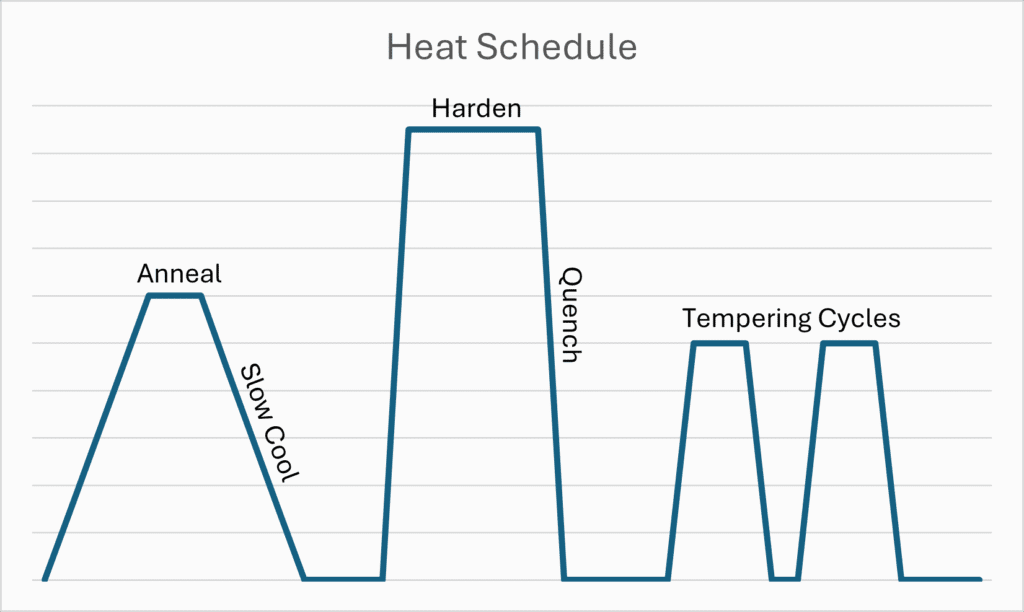
Annealing: The metal is heated above its critical temperature and then cooled slowly. Residual stress is reduced, the ductility of the metal increases, and the material is made less brittle. Annealing improves the properties of the metal by making it more durable and workable.
Normalizing: The temperature is increased above the annealing range and then cooled by room temperature air. Normalizing increases the hardness of the product and leads to less internal stresses and more machinability.
Quenching: The material is rapidly cooled by using water, brine, or oil to form a hard microstructure.
Tempering: The material is heated to a temperature below its hardening point, held at that temperature, and then cooled. Tempering improves the toughness of the product, while reducing brittleness and internal stresses.
Product inspection and NDT, also known as non-destructive examination (NDE), are the final steps in the metal casting process. NDT detects surface and internal flaws without damaging the casting. It also checks the structural integrity and physical properties to ensure the quality and performance of the final product.
The type of NDT required depends on the industry and performance specifications. Various tests include:
Visual Inspection: Immediate initial inspection to check for surface defects or casting flaws such as cracks, porosity, inclusions, tears, and cold shuts.
Liquid Penetrant Testing (PT): Small surface imperfections like cracks and pores are detected by using a colored liquid dye. The metal is cleaned, dried, and then bathed with a penetrant solution. The dye is given enough time to flow into invisible cracks and crevices, so they are clearly visible.
Magnetic Particle Testing (MT): Detection of surface or subsurface defects on ferromagnetic materials.
Ultrasonic Testing (UT): Utilizes sound waves to detect cracks and defects in the product as well as material thickness.
Radiographic Testing (RT): Provides imaging to detect internal flaws using X-Rays or gamma rays.
Heat treatment, Inspection, and NDT are crucial processes that not only ensure industry standards are met, but that the casting is of the desired quality, performance, and safety.
Badger Alloys is a full-service casting manufacturer delivering world-class castings from pattern to finished, machined products. With 60 years of experience, we offer extensive onsite testing and quality assurance through cutting-edge testing equipment and our dedicated Testing and Research & Development Departments. Our team is comprised of experts in NDT testing who help maintain a strong focus on safety and consistently meet industry regulations.
For questions about our testing capabilities, contact Nick Hanson at nickh@badgeralloys.com. Learn more about our sand casting services and quality testing at badgeralloys.com or contact us at 414/258-8200 today.